
Specialist engineering equipment is rarely designed with an entire class in mind. A university may have, for example, one wind tunnel available to their students, and while this is a valuable piece of equipment—often costing tens of thousands of dollars—only a small group can use it meaningfully at any one time. Students take turns operating it, share controls, and must fit their few experiments into scheduled, supervised sessions.
Virtualizing that wind tunnel would allow every student to conduct experiments simultaneously. But that raises an interesting and potentially concerning question: if every student is actively using equipment at once, doesn’t that create more work for their teachers?
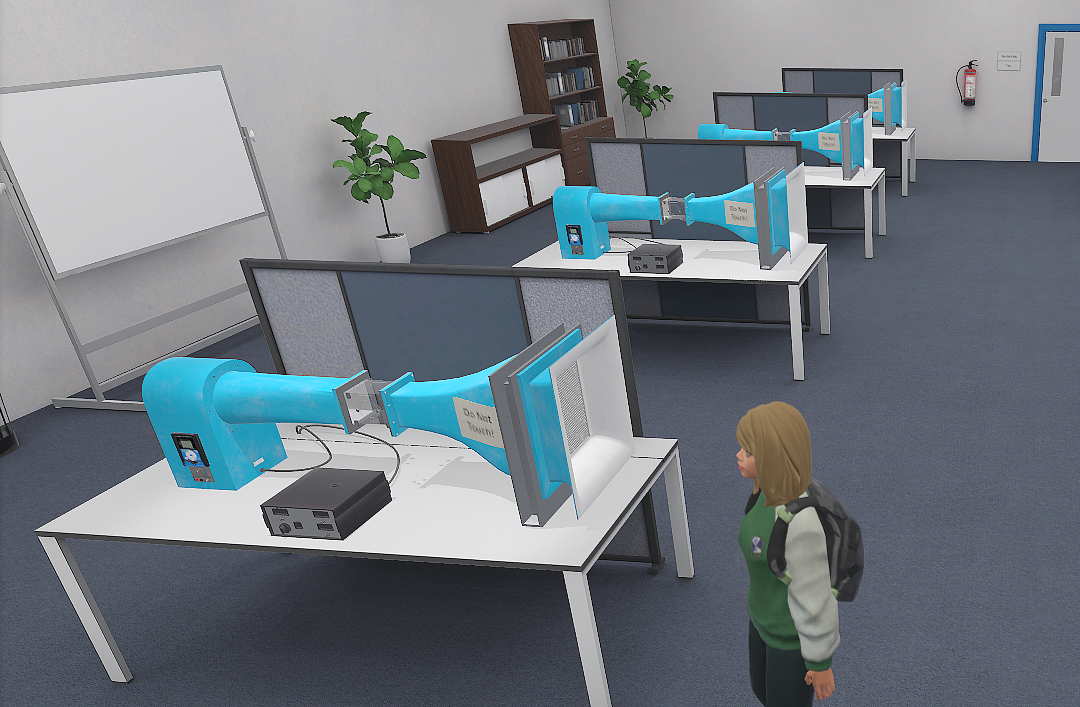
A student chooses an open-loop wind tunnel in their virtual engineering classroom
More activity does not mean more problems
At first, it seems reasonable to assume that a fully active class would require more teacher support. If every student is undertaking experiments, surely there are more opportunities for questions to arise?
However, the number of questions students might have is only part of the picture. In our experience, virtual equipment changes what students need help with and the kinds of questions they ask.
In a physical laboratory, teaching staff are responsible for more than explaining the subject. They may also need to manage access to the equipment, demonstrate its operation, monitor its safe use and troubleshoot any practical problems that might arise. A student’s difficulty may have less to do with the engineering concept being taught and more with getting the equipment to work as expected.
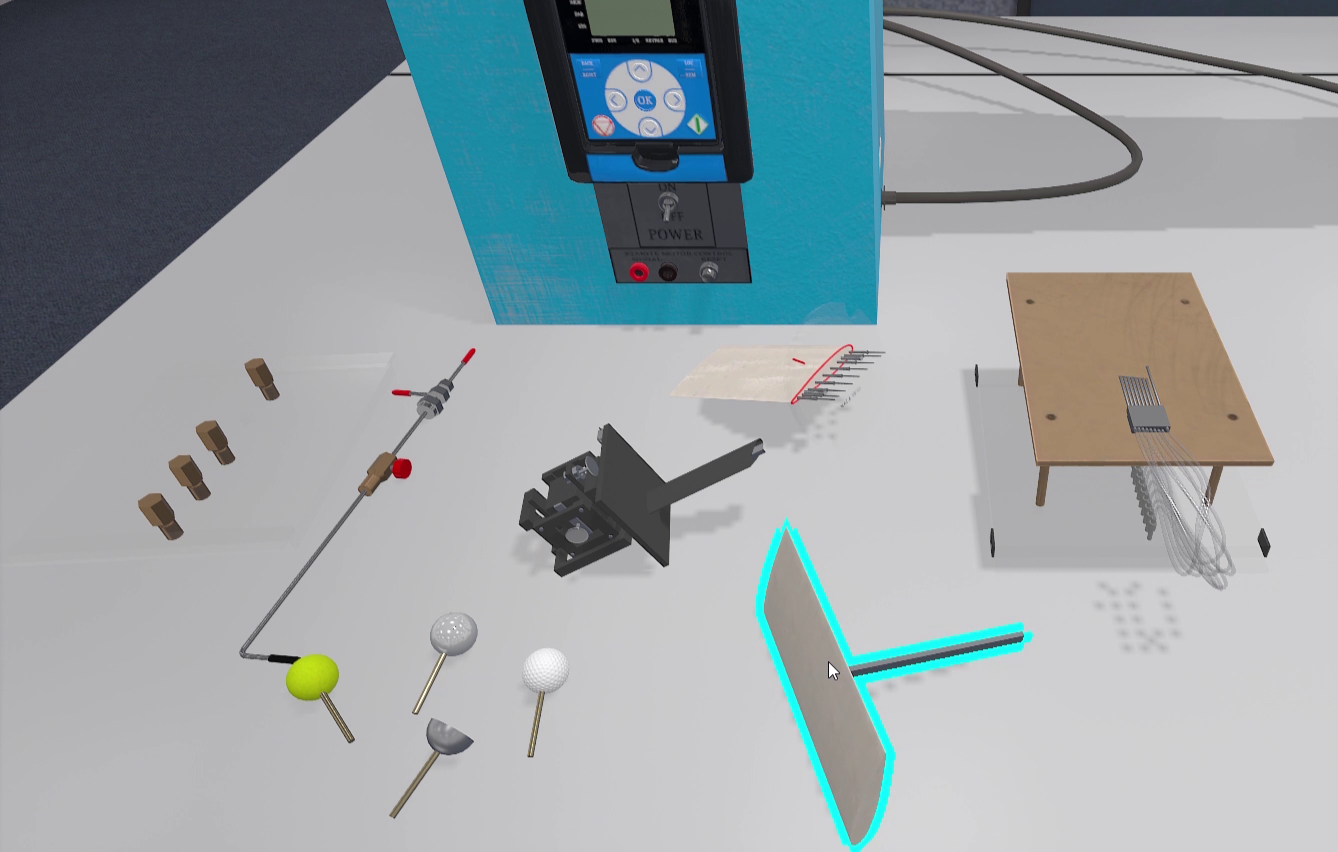
Highly accurate virtual engineering equipment selection screen
In a virtual environment, many of those practical interruptions are removed. The equipment is ready to use, the components students need are already available, and the experience itself can guide them through its operation.
This does not mean students stop asking questions. Instead, it gives teachers more opportunity to answer questions about the experiment itself: Why did the result change? What is happening to the airflow? How does changing one variable affect another?
Those are the conversations teachers want to have, and in a multi-user environment like UniVirtual, they can.
A different kind of classroom support
At UniVirtual, we’ve already seen how virtual equipment changes teaching workloads in practice. For one client, laboratory classes that had previously required 20 teaching assistants were supported by five after only one semester of using our virtual labs.
The significance of that change is not simply that fewer teaching assistants were needed. It’s that student support could be delivered differently. Rather than spending the session managing multiple physical workstations and responding to equipment-related issues, teaching staff could move through the virtual classroom and see how students were progressing, focusing their attention where it was most useful.

Instructor view over a student avatar’s shoulder in a UniVirtual virtual lab
Virtual environments can also make it easier for students to ask for help. A student who might hesitate to draw attention to themselves across a busy physical laboratory can ask a question privately and receive support without stopping the rest of the class.
An additional benefit is that, with fewer equipment-related questions, the questions that remain can reveal where students are struggling with the learning material. This gives teachers more opportunities to address misunderstandings and strengthen pre-lab materials where needed.
From sharing equipment to conducting experiments
Consider a class learning with an open-loop wind tunnel. When access is limited to one physical wind tunnel, students will usually work in small groups. That experience still has value, but participation within each group may be uneven. One student might operate the controls, another might record the results, and others may primarily observe.
In a virtual version of the same equipment, every student takes an active role.
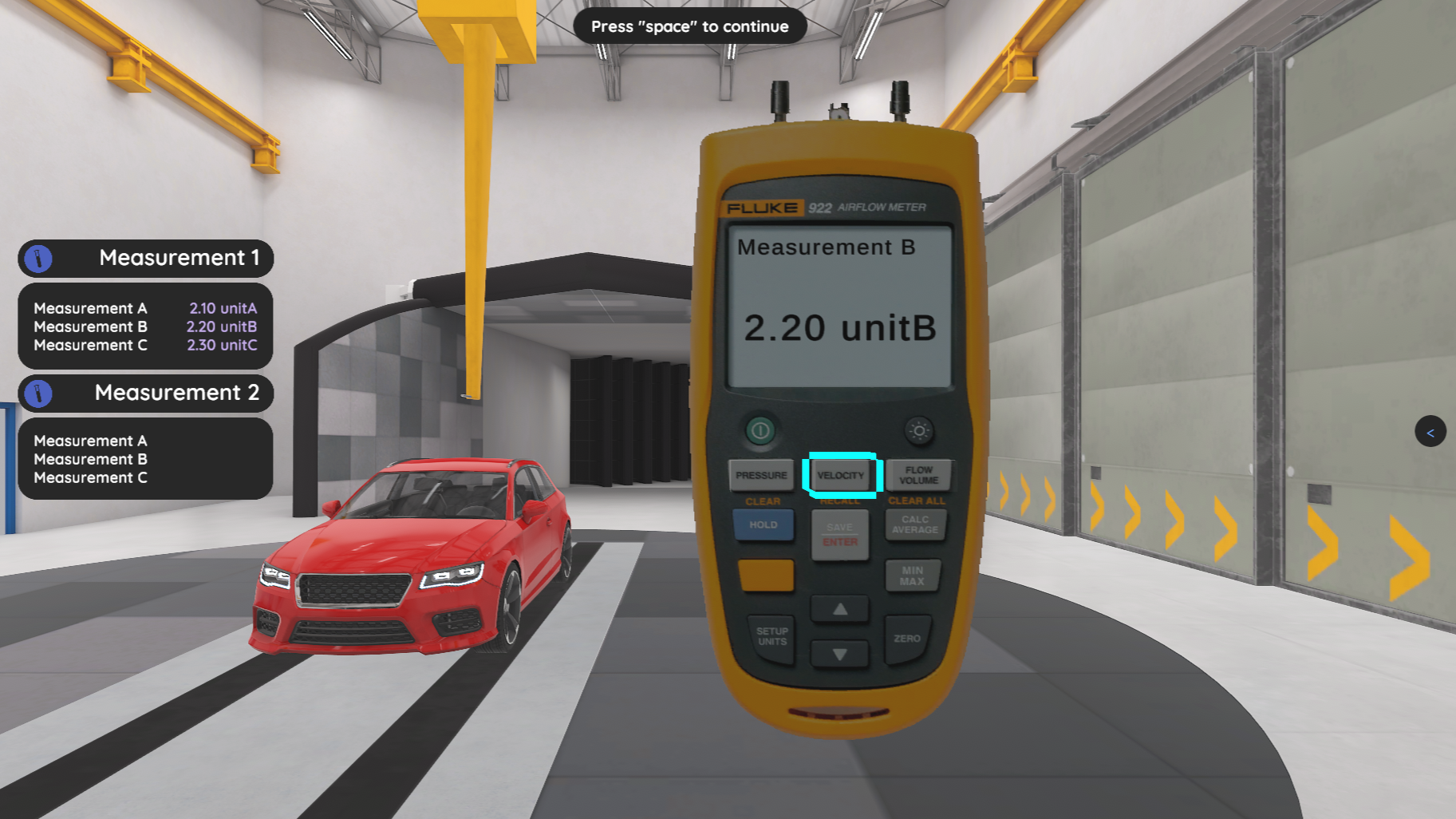
Student POV of a virtual experiment in UniVirtual’s closed-loop wind tunnel environment
Teachers are no longer overseeing a queue for a limited resource. They are teaching a class in which every student can explore the same principles at the same time. This also gives instructors a clearer picture of each individual student’s understanding. When students conduct their own experiments, their choices and results can reveal misconceptions that might otherwise be hidden within group work.
The experiment does not have to end with the class
Access can continue beyond the scheduled session. On the UniVirtual platform, students can return to the virtual wind tunnel in their own time, revisit any activity and repeat experiments as often as they need. They can test what happens when they change a variable, recover from a mistake without losing their only opportunity to use the equipment, or prepare themselves before working with its physical counterpart.
This freedom can make students more independent. They can repeat processes and discover the answers through experimentation.
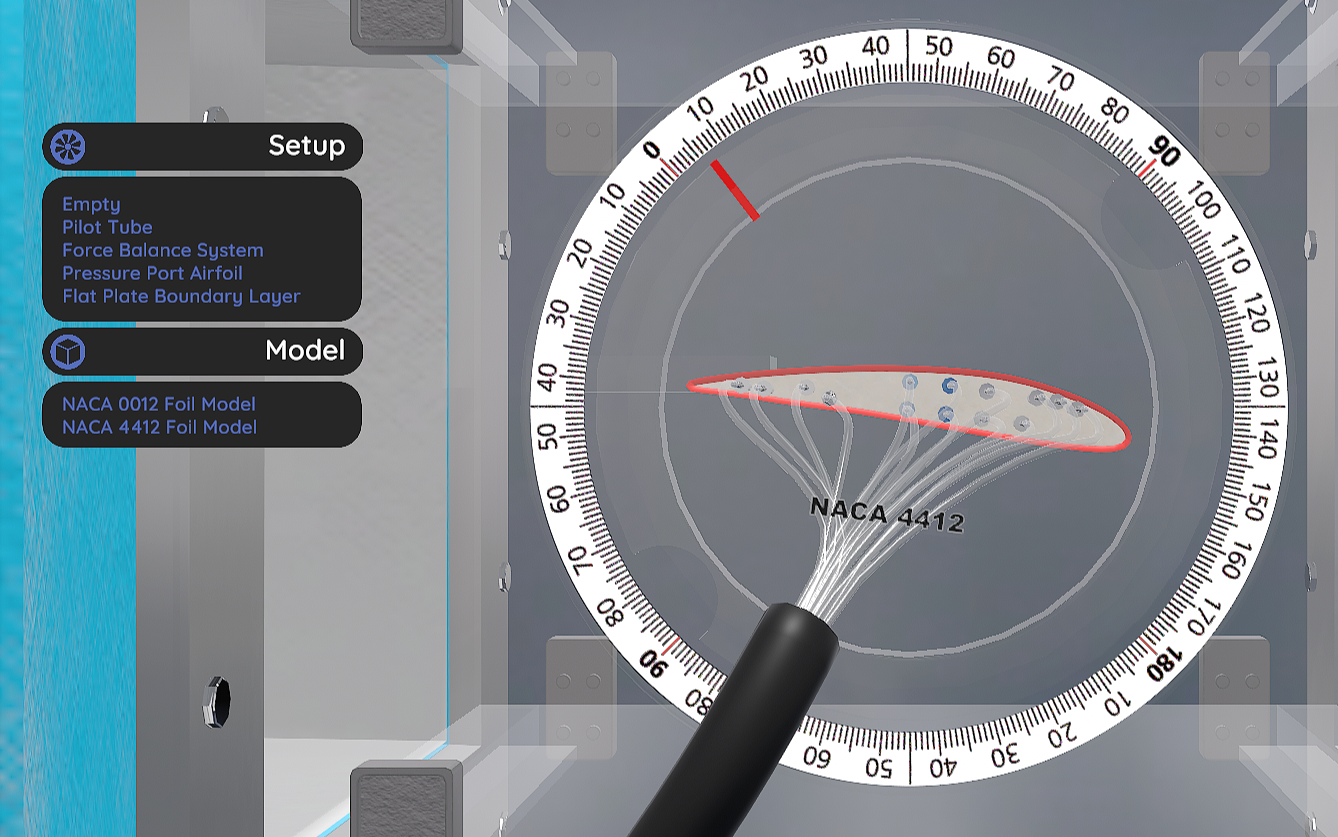
Virtual engineering setup and callibration screen, UniVirtual Engineering
Changing what the teacher is there to do
Giving every student simultaneous access to virtual equipment isn't duplicating physical laboratories with more workstations. Virtual labs change how classes operate.
Students spend more time experimenting and aren’t competing for access. Teachers spend less of the session managing equipment and more of it helping students understand what their results mean.
So, does giving every student access to the equipment synchronously make the teacher’s job harder? Our experience suggests that, in fact, it changes their focus in a more useful direction. The teacher is still present, still answering questions and guiding the class, but their attention can move away from the practical limitations and towards the learning they are there to support.